Showing posts with label artist tips. Show all posts

Thursday, May 23, 2013

Artists: Expand Your Creative Observation in Just One Week

Increase your powers of Creative Observation with this simple daily exercise and you'll notice the difference in just one week!

DAY 1
Choose an everyday object and observe it using all of your senses:
  • Study it, observe it's color, texture, patterns, shape and edges.
  • Pick it up and feel it's textures and the weight of it
  • Close your eyes - what does it smell like?
  • Tap it with your fingers, how does that sound? Does it make a 'thunk', 'rustle' or a 'ping'? Run your fingers across it, can you feel a change in texture?
  • Is this something that would have a taste? Is so, what would it taste like? Compare it other things.
Now put the object away - out of sight. Pick up your drawing pad and draw the object from memory. Include as much detail as you can and also aim at creating impressions of sound, smell and taste.

DAY 2
Again pick up the object and focus on it with all your senses, just as you did on day One. Again put the object aside and without looking at your previous drawing, draw the object once more. You don't have to draw the object from the same angle or position as you did on day One. In fact, it's best if you draw today using your new insights.

DAYS 3, 4, 5, & 6
Each day do the same things: observe, put aside and then draw the same object from a different perspective. Make sure that you DO NOT look back at any of your previous drawings.

DAY 7
On this final day SKIP observing the object - just draw it using all of your previous memories and senses. When you are finished with your final drawing, go back through all of your drawings and compare them. What changes do you see? How much has your observation of the object improved?


Thursday, May 2, 2013

Drawing Tips: Solution for Broken Rubber Band

Blick Sketch Pad BoardsQuestion of the Week:
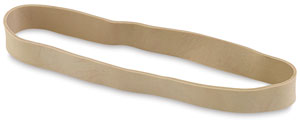
"Hi Wendy, The large rubber band on my big drawing clipboard (for the sketchpad) snapped and I was wondering if you knew where (either in person or online) I could purchase a replacement?
Thanks, Victoria".

Well Victoria, these bands use to last for years, but this is no longer the case. You can sometimes go back to your local art store or go online and order replacement bands. It's best to order several though, because they are just going to keep on breaking.

10 Shot Bands
Blick Sketch Pad Boards
I once purchase about 10 of these large drawing boards to have on hand for new students. I had them stacked in a corner of my studio and one morning I found that almost every band had snapped and shot across the room. It was just a matter of days before the last couple joined the carnage. It seems that now days most bands give way within a few months and if you just purchased your board (as Victoria had), but it's been sitting in the art store for awhile . . .


A Better Solution
So Victoria, I have an even better idea.

Head over to your local hardware store and pick up a short bungee cord.

You can snap it across your pad when you are ready to carry it and pop it off easier than you could the rubber band.

Don't get one that goes all the way around, just one long enough to go from one side to the other.

Easier, simpler and will last for years.


Or better yet, order one from Amazon:

Thursday, March 7, 2013

Why You Should Always Start with a Fresh Palette


When you begin a new oil painting session and are using oils or water soluable oils, set yourself up for success by starting with a fresh palette.

What do I mean by Fresh Palette?
Begin with a clean palette and NEW paint.


Why? Imagine this...

When you are 'In the Flow' of painting, you are at your most creative. You are open and creatively observing your subject. Your progression from subject, to palette, to canvas should move freely in order to maintain your momentum. You are in what I call a 'Seeing' mode.

You clearly know your next move. You have made a decision as to the next color and value, where you want to place it on your painting. You can feel with all your being, the right strokes you intend your brush to make. You're excited and anticipating the perfect effect.

You are holding all of this in a charged hyper focus. You reach to your palette and dip into paint – and it's dry and/or sticky or .... gone. Gone as in: you didn't mix enough paint at the beginning of your session - or perhaps you didn't mix it at all.

SLAM! You've brought all your flowing creative juices to a screeching halt.

You start searching to find the paint that is moist - failing that, you dig in your paint box seeking appropriate tube or tubes, look for a clear area to place more on your palette, scan your work area for your palette knife to mix.... uh.... what was it you were going to do?

Sound familiar?

By this time you have forgotten your initial inspiration.

What are you afraid of wasting?
Are you afraid of wasting your precious, expensive, investment of paint?

Because what you're actually wasting is 
your precious time,
patience, creativity and growth.

Which is harder to come by?
Which has more value?


SOLUTION
Transfer any usable paint from your previous session to the new palette surface. Add new paint and create enough of your mixes to cover the area that you plan to work on during this session.

Put plenty of paint out on a your palette. Mix enough of what you'll need. How much is enough? If you are constantly running out of your mixes, this could be a clue!

Stay away from using paint that has started to harden or grow sticky as the bonding action between paint and canvas occurs during the drying process. If drying has already started, you lose some of the strength of the paint layer. This will lessen the archival quality of your piece.

You also end up with chunks of dried paint in your brush, on your palette knife and stuck to your canvas. Unless you are going for this effect, picking out the dried chunks can become annoying. Chunks add texture (which catches ambient light) and if your overall painting style is one of smoothness, those chunks are really going to show up.


When you are through with your session, pull leftover paint into small piles and place a few drops of appropriate oil on each pile. Cover your palette with plastic wrap and place it in the freezer. If you find that it gets flattened by all your other frozen goods, place it inside a shallow container. It'll keep for weeks.

Here is a good size oil painting palette from Amazon: (click to read more)