Thursday, May 30, 2013

Student Success Story: Jamie's Maui Painting


Triplets
See that gal? The first one on the left with the long blonde hair? Well that's our Jamie.

And why is she standing with three other people - each holding the same painting?

That painting is of Napili Kai beach resort on Maui, a very special place to Jamie and her family. In the 1960's Jamie's grandparents began visiting every year. Now 4 generations of her family have made Napili Kai a summer family vacation tradition. The resort holds many joyful memories for her and her family.

Last fall Jamie began creating her own original painting of this bay from images and her memory. She came to class several times every week, put in hours on her own at home and incorporated a number of private lessons in order to complete the piece before the Christmas holidays.

It was a lot of work but she made it with about a week to spare and had the painting imaged, printed and framed. And you can see the happy smiles as her family received them for Christmas.

Transformation
Although she intended this as a gift for her family, Jamie's greatest gift actually became a gift of inner growth. All her hard work and time has resulted in an exceptional mastery in oil painting.

I watch her in my classes deftly executing painting after painting with superb skill and speed. She put in a lot of hours last year - and now it's totally paying off.

A few months worth of investment has created Jamie into a first-rate artist. You go girl!


Thursday, May 23, 2013

Artists: Expand Your Creative Observation in Just One Week

Increase your powers of Creative Observation with this simple daily exercise and you'll notice the difference in just one week!

DAY 1
Choose an everyday object and observe it using all of your senses:
  • Study it, observe it's color, texture, patterns, shape and edges.
  • Pick it up and feel it's textures and the weight of it
  • Close your eyes - what does it smell like?
  • Tap it with your fingers, how does that sound? Does it make a 'thunk', 'rustle' or a 'ping'? Run your fingers across it, can you feel a change in texture?
  • Is this something that would have a taste? Is so, what would it taste like? Compare it other things.
Now put the object away - out of sight. Pick up your drawing pad and draw the object from memory. Include as much detail as you can and also aim at creating impressions of sound, smell and taste.

DAY 2
Again pick up the object and focus on it with all your senses, just as you did on day One. Again put the object aside and without looking at your previous drawing, draw the object once more. You don't have to draw the object from the same angle or position as you did on day One. In fact, it's best if you draw today using your new insights.

DAYS 3, 4, 5, & 6
Each day do the same things: observe, put aside and then draw the same object from a different perspective. Make sure that you DO NOT look back at any of your previous drawings.

DAY 7
On this final day SKIP observing the object - just draw it using all of your previous memories and senses. When you are finished with your final drawing, go back through all of your drawings and compare them. What changes do you see? How much has your observation of the object improved?


Saturday, May 18, 2013

9 Ways to Improve Your Art Without LIfting a Finger


"Beach Path" ©Froshay
Practice Seeing
As you go about your day, practice seeing.

You practice seeing when you draw and paint anyway, now do it all the time and with purpose. 
  1. Observe the movement of nature, of people and animals.
  2. Study how the changing light affects and defines the objects around you.
  3. Trace the outline shapes of different types of trees with your eyes.
  4. Squint to simplify shapes and to limit the values that you see.
  5. Notice the many subtle differences of color within just one leaf, a worn shoe, a shadow or that 'white' cloud overhead.
  6. Let your eyes follow the contours of a pile of fabric, the face of a child or the car stopped in front of you at the light.
  7. Close your eyes and become aware of the fragrances, aromas and scents around you. Describe them in your mind using only color and shape.
  8. Listen. To wind chimes, a cat's purr, the breeze rustling through leaves and ask yourself, "How would I create that sound into a work of art?"
  9. Touch textures and really FEEL them. Notice the difference between the bark of a tree and the soft fur of the cat. How can you recreate that feeling?
The more that you do this, the better your art skills will become, honest ... and all without lifting a finger - okay well, maybe you'll have to pet the cat!

Side Effects include a calming feeling, a closeness to nature and often, a gentle successful euphoria!

Thursday, May 2, 2013

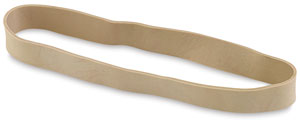
Drawing Tips: Solution for Broken Rubber Band

Blick Sketch Pad BoardsQuestion of the Week:
"Hi Wendy, The large rubber band on my big drawing clipboard (for the sketchpad) snapped and I was wondering if you knew where (either in person or online) I could purchase a replacement?
Thanks, Victoria".

Well Victoria, these bands use to last for years, but this is no longer the case. You can sometimes go back to your local art store or go online and order replacement bands. It's best to order several though, because they are just going to keep on breaking.

10 Shot Bands
Blick Sketch Pad Boards
I once purchase about 10 of these large drawing boards to have on hand for new students. I had them stacked in a corner of my studio and one morning I found that almost every band had snapped and shot across the room. It was just a matter of days before the last couple joined the carnage. It seems that now days most bands give way within a few months and if you just purchased your board (as Victoria had), but it's been sitting in the art store for awhile . . .


A Better Solution
So Victoria, I have an even better idea.

Head over to your local hardware store and pick up a short bungee cord.

You can snap it across your pad when you are ready to carry it and pop it off easier than you could the rubber band.

Don't get one that goes all the way around, just one long enough to go from one side to the other.

Easier, simpler and will last for years.


Or better yet, order one from Amazon:

Thursday, April 18, 2013

How To Speak Intelligently About Art When You Know Nothing


Written by Guest Author: Tien Frogget

"Catching the Breeze" © Steve Henderson
Sometimes I’ll be discussing art or photography with someone and they will laugh nervously and say something like, “oh, I don’t know much about art,” as if there is some vast cloud of art knowledge that one must be tapped into in order to appreciate it.

Unfortunately, I think a lot of viewers can be intimidated by art because of those few people who have a lot of art knowledge and like to show it off. They talk about art like a sommelier would talk about wine, describing the process by which it was created and the details and nuances of each piece. In the presence of so much knowledge, it can sometimes be difficult to speak up when the only thing you know is whether you like the piece or not. You might not want to say much because you think people will laugh at your own lack of knowledge.

"Fire" © Wendy Froshay
The funny thing about this is, art is exactly like wine, in that you honestly don’t need to know much about it to enjoy it – when you find something that fits your tastes, you know. You appreciate it because you like it, and that is all that matters.

Think about one of your favorite pieces of art. (Better yet, if you can look at it right now, go ahead and let yourself get lost in it.) What is it about this particular piece of art that draws you in? What compels you to study it, to absorb it, to question the meaning behind it? What is it about this work that you like so much?

"Tommy" © Richard Harpum
The odds are, it’s more than just a pretty picture. It’s not just the lines and shapes and colors – it’s the way they are arranged on the canvas in such a fashion that they cause a reaction in you. In fact, this piece of art makes you feel something. Sometimes as viewers, we are aware of what something makes us feel, especially if it is a strong feeling – love, passion, excitement, lust; pain sadness, anger, torment. But we are not always so aware of the subtler stirrings that take place just under the surface – peace, desire, concern, interest, wistfulness, mystery. It is often those quieter feelings that settle in and make us lose ourselves in a work of art, and the more we look, the more we feel.

"Frequency of a Hug" © Emelina Figueroa
Truly, many great works of art were created when the artist was feeling something very deeply, and was able to channel those emotions into their work. Take a look at some of the pieces in this post by OC Designer Source artists. What do you feel when you look at each of them? Which ones tug gently at your heartstrings – and which ones grab them and don’t let go?

"No Limits" © Tien Frogget
Next time you are at an event or you are somewhere where you are looking at art, and you are feeling uncertain of your own knowledge, remember that art is all about emotion – and that’s all you need to know. If someone asks you what you think, just describe to them the way the piece makes you feel; what it evokes from you. That is the most important art knowledge you can ever have.

Thursday, April 11, 2013

How to Beat Creation Frustration


Edvard Munch, "The Scream"
Artists are Fearful Lot
We artists seem to have loads of fear issues. I want to address just one of those fears - the fear of creating something ugly. By ugly I mean, ugly in the eyes of the creating artist.

Artists are extremely fearful of what I call, "Making Ugly". 

What is Making Ugly?
Making Ugly is a situation that happens to you unexpectedly. You are going along, happily making art and growing a little bit better every so often, and then.....


BLAM! you create something ugly! And it's not just ugly, it's bad. So bad that it looks as if it were something you created before you began your journey into art studies (you know, that embarrassing pre-beginner stage).

You throw it away. You create something else. It turns out ugly too! This happens again...
             .... and again,
                           .... and again!

Frustration!
You begin hiding your work. You buy self help books, you seek out miracle classes, videos and cures. You think, "Perhaps if I try a different technique"? But it's no use, no matter what you do, you can only make ugly.


You lose your confidence. You begin to think you've lost your touch - you realize that are not a good artist - in fact, you're not an artist at all - you feel you should walk away, give it up - find another love.

STOP!
Or rather, don't stop. Don't walk away, don't give it up, and don't sell yourself short. Keep going. Keep making ugly. Push your way through.


Why? Because this is a sign that you are heading for a Major Breakthrough (and I mean MAJOR!)
"New Foal" ©Froshay
It may take a few days. It may take weeks. It may even take months (especially if you dabble). But keep on creating, because just as suddenly as you 'lost' it, you'll make a breakthrough - and when you do, you'll be miles ahead of where you'd have been if you'd just kept steadily plodding along without that deep pit of despair in the path. Yeah, "Making Ugly" is the pits.

Transformation
Time and again I've watched my students (and myself) go through this process. I talk about it in classes, but students forget, until they experience it the first time. Those that remember, those that push through are the successful artists. And everyone else? Well, they've moved on to other pursuits.

One of my beginner students framed it well in his email about the 'Making Ugly' process. He said:

"Brown Bear" ©Froshay
"I thought I'd add to your collection of emails like this.

Since taking your class back in March, I've just had my first experience of "making ugly" and, of course, the eventual "ah ha" moment. That's just uncanny! It snuck up on me, but once I was aware of it, I instantly thought of your line-graph visual aid.

And you didn't even mention the best part, the fact that once you snap out of it, all that "ugly" ceases to be ugly and becomes good reference for what does and doesn't work.

I can't thank you enough!"   ~ Greg Sloan

Just Keep Going
By the way, I've found that this same concept works in life. As long as I just keep going - I always make a breakthrough - ALWAYS.


Thursday, March 28, 2013

How Embracing Imperfection Will Boost Your Creativity

Written by Guest Author: Tien Frogget


One of the major keys to being a more creative individual and allowing your inner creative voice to speak is to let go of self-criticism and embrace imperfection.

I know exactly how to feels to look at the creative work of other people and become dejected - even after the successes that I've had, I still (frequently) see others work that just wows me and after I get past the beauty of if I start comparing it to my own work and instantly feel smaller.  I think, "I could never be that good!" or, "I like their style better than mine!"  And on really bad days I'll think things like, "Why even bother trying?  If they're already doing it, then what's the point of me trying to do it, too?  The world doesn't need another photographer."  And then I look at my work and remember that's exactly the reason why I should.


If I had given up the first time that I had that thought, my work would never have evolved and improved and become what it is today. And it certainly would never have had the chance to become what it will be tomorrow.

There are tons of people out there that don't like my work!  And that's totally okay.  Because for every person that doesn't there's another that does.  That's the greatest gift of art: it is completely personal. Your work will not be loved by everyone.  But it will be loved by some, and that's what matters.  You have captured just a little more beauty and you've done it through your own eyes and you've helped make someone else's world to be more beautiful because of it.

Every great artist, writer, photographer, and creative person has to start at the beginning.  How quickly we advance all depends on how much time we spend doing what we love -and how much time we spend loving what we do.

Imagine if Ansel Adams had taken a few rolls of film on his very first camera, and when he developed them, he said "Well these aren't very good.  I must not be cut out to be a photographer," and then he quit!  Can you imagine the world without his stunning landscapes?  I can't either.  But you know what?  He had to start where we all started: trial and error.  Imagine if they made a book out of all his bad photographs.  Doesn't happen, does it?  But people don't realize that even he took bad photos all the time, too.  They just don't get any publicity. He continued to take pictures because he loved to.


Change the way you talk to yourself about your abilities.

This one takes a little effort if you're used to looking at your work and feeling your heart sink and frequently think thoughts like, "See?  You suck!  Everyone else out there is so much better than you.  You're just not improving fast enough."  Changing the way you think is the second most important thing you can do to improve, after practice.
  • Give yourself permission to create endless bad things.
  • Remind yourself that anything you don't like can go in the trash and you will never have to look at it again.
  • When you are feeling frustrated, remind yourself that even creative geniuses create things that they don't like; in fact, they are often their own worst critics.
  • You might not be seeing your work as it actually is, but through your own "not good enough" filters.  It might be better than you think.
  • Remember that you are only going to get better.
  • Try to create when you are in a really good mood.  This doesn't mean make excuses to not go out if you're in a bad mood, it just means that if you're feeling great and you have time, go create something.  When you are feeling good, you will automatically be more creative.  (Seriously!  I'm not kidding about this one!)


Making Ugly is Good.

One of the smartest people I know (aka Mom) is a professional artist and a teacher.  There have been countless times I have gone to her after drawing a particularly ugly picture or trying to take a photo that doesn't turn out, completely frustrated because it didn’t come out the way I wanted it to. She always reminds me, "When you're making a lot of ugly, it's a sure sign that you're about to have a breakthrough."

A lot of people quit when they're not doing as good as they think they should be doing, because they take it as a sign that they must be bad. But the truth is, that's just how the learning curve works. Every time I create something new and brilliant and wonderful, I always take a look at what I created right before (if I haven't thrown it away already) - and it's usually especially terrible!

But isn't that good to know?  Next time you don't like what you're creating, don't get mad at yourself for not being better. Instead, remember this and take it as a sign that good things are in the works.  "Making ugly" is like the creative brain's way of rearranging and reordering itself to make room for new pathways and new ways of doing things. Work through it, and watch what you create in the next day or so.  You might just be pleasantly surprised.